
Targeting the Root Cause of Your Dry Eye
Persistent eye discomfort is rarely just a minor inconvenience; it is often a sign of an underlying issue that requires professional attention. At Cary Family Eye Care, we focus on diagnosing and treating the root cause of dry eye rather than simply addressing the surface symptoms.
A comprehensive dry eye assessment completed by an optometrist is the essential first step toward finding relief. Based on your specific results, we provide a range of management options tailored to the unique cause of your discomfort.
Book your appointment online or contact us at dryeye@caryfamilyeyecare.com regarding your dry eye questions.
What Is Dry Eye?
Dry eye, also known as ocular surface disease, is a common condition that occurs when your tears can’t provide adequate lubrication for your eyes. This condition is widespread, with 16.4 million Americans impacted by dry eye symptoms.
The health of your eye depends on the tear film, which is made up of 3 layers:
- The mucin layer: The innermost layer that helps tears stick to the surface of the eye.
- The aqueous layer: The middle watery layer that hydrates the eye.
- The lipid layer: The outer oily layer that prevents tears from evaporating too quickly.
When any part of this system is out of balance, the ocular surface becomes unstable and irritated.
Common Dry Eye Symptoms
While the name suggests a lack of moisture, dry eye disease can present with a variety of uncomfortable sensations. Common symptoms include:
- A persistent gritty or “sandy” feeling in the eyes
- Redness and general irritation
- Stinging, burning, or itching
- Excessive watering (a reflex response to dryness)
- Blurred vision that changes when you blink
- Sensitivity to light and wind
What Causes Dry Eye?
Dry eye is a multifaceted condition that can be triggered by internal health factors, environmental stressors, or anatomical issues. Common causes include:
- Meibomian Gland Dysfunction (MGD): A blockage in the glands that produce the oily layer of tears.
- Blepharitis: Chronic inflammation of the eyelids.
- Demodex: An overgrowth of microscopic mites along the lash line.
- Aqueous Deficiency: Often associated with Sjogren’s Syndrome or other medical conditions, where the body does not produce enough water for the tear film.
- Ocular Rosacea: A skin condition that causes inflammation of the eyelids.
- Laser Vision Correction Surgery: Temporary dryness following procedures like LASIK.
Our Approach to Dry Eye
To provide effective relief, we use diagnostic technology to map your eye and tear film health. This includes meibography to visualize the structure of your oil glands (called your meibomian glands), the Oculus Keratograph to measure tear film stability and redness, and the SPEED Questionnaire to track the frequency and severity of your symptoms over time.
In order to fully understand your dry eye experience, we need to understand how it impacts your life, which symptoms you experience most frequently or severely, and if you’ve tried any previous methods, such as over-the-counter eye drops. This information can help us build an effective treatment plan that fits into your daily life.
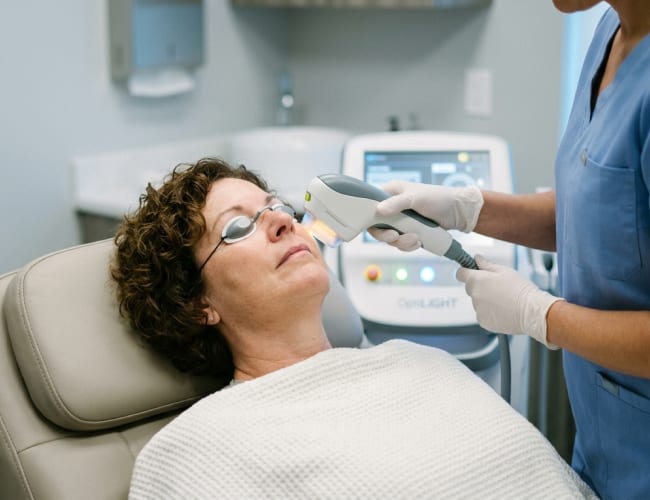
OptiLIGHT IPL by Lumenis is a light-based therapy that uses precise pulses of light to reduce inflammation and improve the function of the meibomian glands.
OptiPLUS RF by Lumenis uses radiofrequency technology to gently heat the skin, stimulating collagen production and liquefying hardened oils in the eyelids to improve meibomian gland function and reduce eyelid laxity.
This handheld device that applies targeted heat and gentle pressure to the eyelids to melt and clear blockages within the oil glands, improving function and restoring oil flow to the tear film. Primarily used for meibomian gland dysfunction-related dry eye, the iLux treatment takes around 8–12 minutes and provides effective, long-lasting relief.
Punctal plugs are tiny, biocompatible inserts placed in the tear ducts to slow the drainage of tears, keeping the eye surface moist for longer periods.
This biological bandage is used for more severe cases of dry eye to support the healing of the eye’s surface and reduce significant inflammation.
This deep-cleaning clinical treatment for the eyelids and lashes effectively removes bacteria, debris, and Demodex mites. It’s performed in-office and can reduce dry eye symptoms caused by blepharitis and Demodex.
This is a manual procedure where the optometrist gently clears the oil glands to restore the natural flow of lipids to the tear film. Meibomian gland expression may be performed after an OptiPLUS RF treatment has softened the oil blockages.
We provide professional guidance on daily maintenance, including eyelid cleansing sprays, heated eye masks, and medicated eye drops to manage your symptoms at home. These may be combined with an in-office treatment, depending on your treatment plan.
Start Your Path to Lasting Relief
Dry eye is a chronic condition, but with the right diagnostic approach and a personalized management plan, you can regain comfort and clarity. Whether your symptoms are caused by MGD, inflammation, or systemic health factors, our team is here to help you navigate your options.
We invite you to take the first step toward better eye health. Book an appointment today for a consultation and a thorough dry eye assessment.

Visit Our Location
Find us on the corner of Carpenter Fire Station Road and Cary Glen Boulevard. Parking is available in the lot behind the medical office building.
Our Address
Contact Information
- Phone: 919-465-7400
- Fax: 919-465-7455
- Email: info@caryfamilyeyecare.com
Hours of Operation
* Closed for lunch from 12:00 PM – 1:00 PM, Mondays through Thursdays