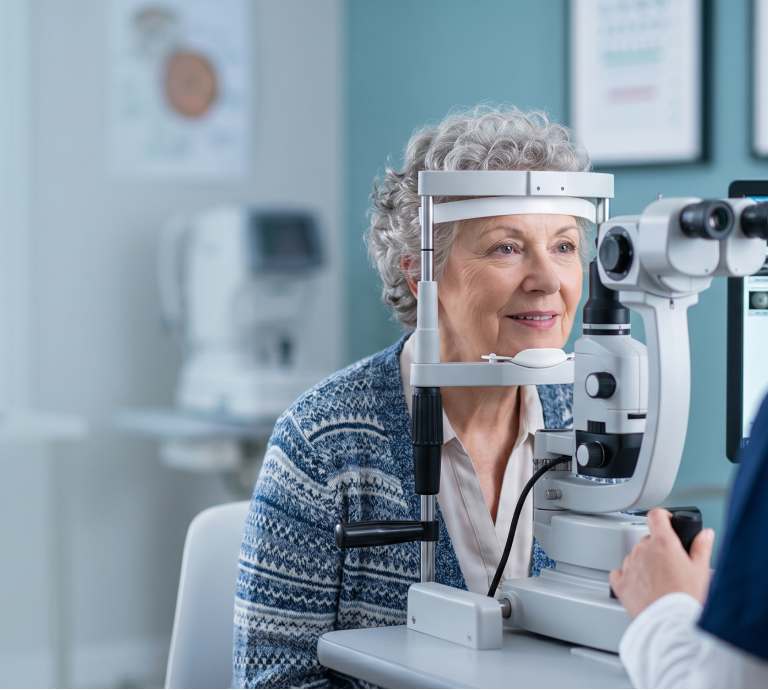
The Importance of Early Detection and Preventive Eye Care
Comprehensive eye exams are the foundation of maintaining long-term vision and overall health.
Many sight-threatening conditions, such as glaucoma and macular degeneration, often develop without noticeable symptoms in their initial stages. By the time a patient notices a change in their vision, significant damage may have already occurred.
Preventive eye care allows for the identification of these issues when they are most treatable, helping to preserve your sight through early intervention and consistent monitoring. To protect your eye health, book your annual comprehensive exam today.
Technology to Detect Eye Diseases
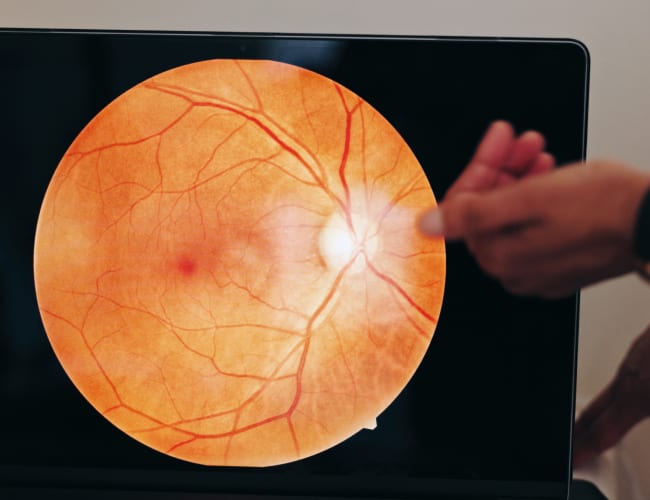
To provide a high level of clinical accuracy, our practice uses targeted diagnostic technology to monitor and manage ocular health. These noninvasive testing methods, including OCT scans, retinal imaging, keratometry, visual field, and MPOD testing, allow us to see beyond the surface of the eye.
Through tools, our optometrists can examine high-resolution images to identify microscopic changes in the retina and corneal structure. This data helps us enhance our standard of care, allowing for earlier diagnosis and more precise management of complex conditions.
What Eye Diseases Can Be Detected in an Eye Exam?
Proactively screening for various conditions during your annual exam is essential for identifying risks before they impact your daily life. We recommend annual eye exams to track changes in your eye anatomy and health over time.
During these visits, we screen for a variety of conditions, including keratoconus, diabetic eye disease, glaucoma, cataracts, macular degeneration, and dry eye, which can affect patients of all ages.
Keratoconus is a progressive eye disease where the normally round cornea thins and begins to bulge into a cone-like shape. This irregularity prevents light from focusing correctly on the retina, causing blurred and distorted vision that often cannot be corrected with standard glasses.
Often called the “silent thief of sight,” glaucoma is a group of diseases that damage the eye’s optic nerve, typically due to elevated internal eye pressure. If left unmanaged, it can lead to permanent peripheral vision loss and eventually total blindness.
Cataracts involve a gradual clouding of the eye’s natural lens, which sits behind the iris and pupil. This clouding scatters light entering the eye, leading to symptoms like faded colors, poor night vision, and generalized blurriness.
Macular degeneration affects the macula, the part of the retina responsible for sharp, central vision. This condition can make it difficult to recognize faces, read small print, or drive, though peripheral vision usually remains intact.
How We Manage Eye Diseases
The first step following a diagnosis is working closely with you to develop a personalized treatment plan. This plan is tailored to your specific medical needs, lifestyle, and treatment preferences.
While many conditions, such as glaucoma and macular degeneration, do not have a cure, they can be effectively managed through medication, lifestyle adjustments, specialty eyewear, and routine monitoring. This can preserve your vision and quality of life.
For patients with keratoconus, we often prescribe scleral contact lenses, which are large-diameter gas-permeable lenses that rest on the white of the eye and vault over the irregular cornea to provide clear, comfortable vision for irregular corneas.
While the disease usually stabilizes over time, we can also provide referrals for a corneal cross-linking procedure if deemed necessary.
We monitor glaucoma through frequent OCT scans, retinal imaging, and eye pressure tests to track the health of the optic nerve.
Management typically begins with prescription eye drops to lower internal pressure, and if necessary, we refer patients for surgical options like laser therapy or drainage implants.
In the early stages of cataracts, we manage the condition by updating prescriptions and using custom lens coatings to enhance visual contrast. When a cataract begins to significantly obscure vision and interfere with daily activities, we provide a referral to a trusted surgeon for cataract removal.
To manage AMD, we complete MPOD testing to assess the density of your macular pigment, which helps determine your risk for progression. For at-risk or diagnosed individuals, we recommend specific dietary supplements and lifestyle changes to support retinal health and slow the impact of the disease.
Protect Your Vision for the Future
Eye disease management is a lifelong commitment to preserving your quality of life. By combining diagnostic technology with personalized care plans, we help you navigate the complexities of ocular health at every stage.
Do not wait for symptoms to appear before scheduling an eye care appointment. Book routine comprehensive eye exams to protect your vision and keep your eyes healthy for years to come.

Visit Our Location
Find us on the corner of Carpenter Fire Station Road and Cary Glen Boulevard. Parking is available in the lot behind the medical office building.
Our Address
Contact Information
- Phone: 919-465-7400
- Fax: 919-465-7455
- Email: info@caryfamilyeyecare.com
Hours of Operation
* Closed for lunch from 12:00 PM – 1:00 PM, Mondays through Thursdays