Children rarely complain about blurry vision because they assume everyone sees the world exactly as they do. You might notice them sitting unusually close to the television or having trouble recognizing faces from a distance. These small clues suggest their eyesight is changing, and they’re worth paying attention to.
Myopia does get worse with age, especially during childhood and the teen years, but progression typically slows and stabilizes in the early 20s for most people. Knowing what drives that progression, and what you can do about it, makes a real difference in your child’s long-term eye health. A pediatric eye exam is a great place to start to discuss options before prescription changes become a pattern.
Understanding Nearsightedness
Myopia is the clinical term for nearsightedness. If your child has it, they can see things up close clearly but struggle with anything at a distance. This happens when the eye has grown slightly too long, or the cornea is too curved, causing light to focus in front of the retina rather than directly on it.
Myopia is most often diagnosed between ages 8 and 12, right when kids are spending more time on schoolwork and screens. It tends to run in families, so if either parent is nearsighted, your child’s risk goes up. Research projects that global myopia prevalence could reach 52% by 2050, so it’s important to recognize the symptoms early since high myopia can raise the risk of serious complications down the line, such as:
- Retinal detachment
- Glaucoma
- Cataracts
- Macular degeneration
Signs Your Child’s Vision May Be Changing
Kids often adapt to poor vision rather than asking for help, so you’ll probably need to watch their daily behavior for clues. Schedule an assessment with an optometrist if you notice any of these common signs:
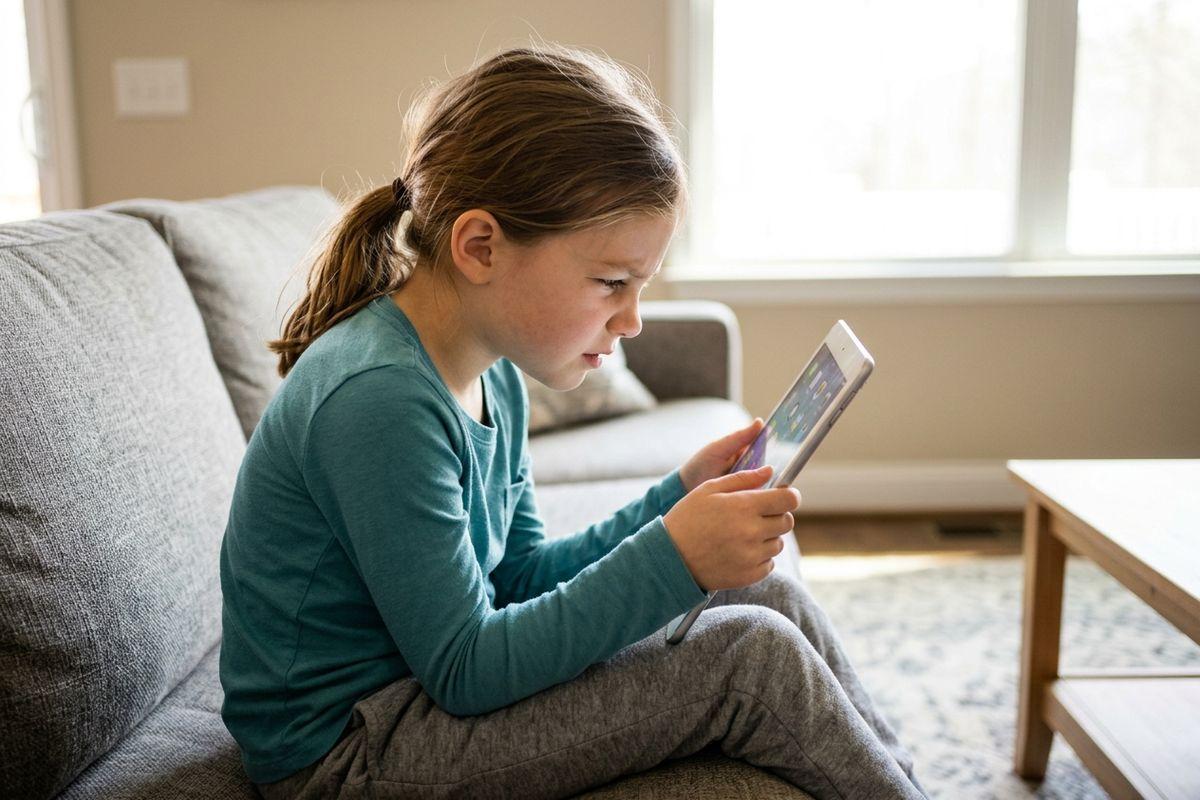
- Squinting to see the board at school or the TV at home.
- Headaches or tired eyes after school, especially after a full day of close-up work.
- Trouble reading street signs or recognizing friends at a distance.
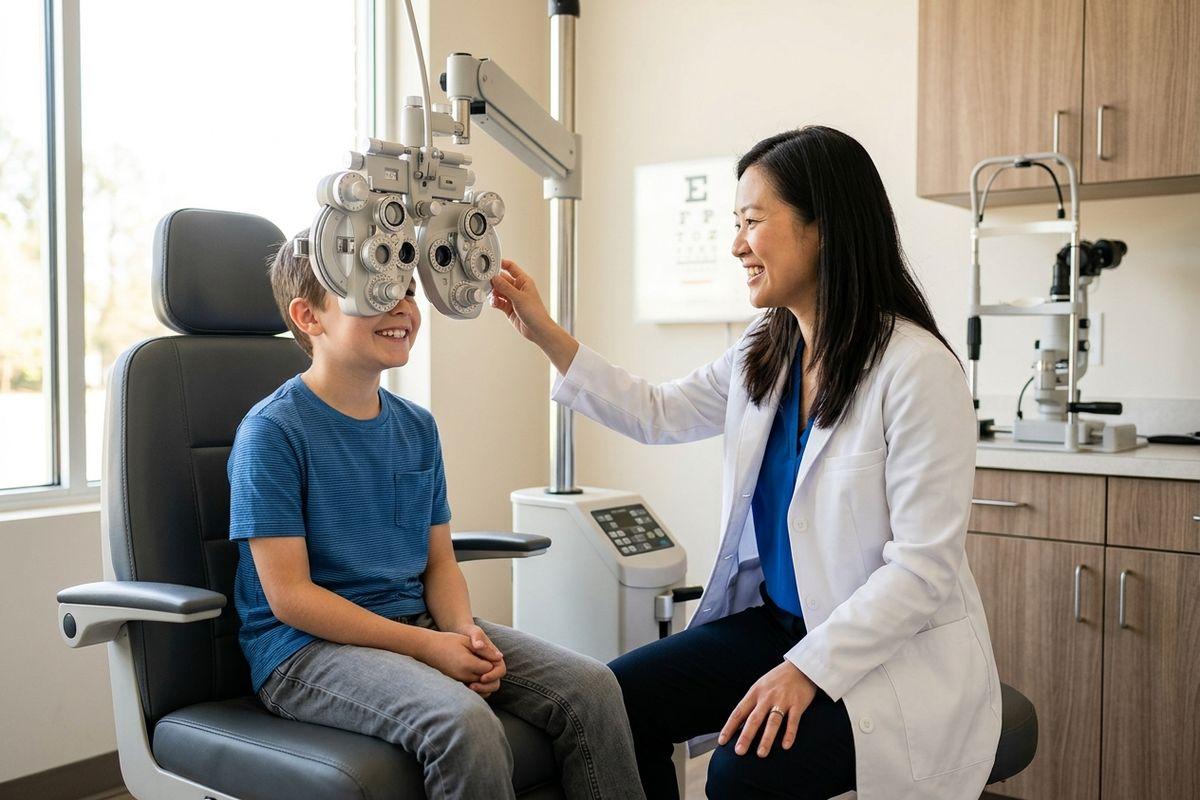
If any of these sound familiar, a comprehensive evaluation gives your optometrist a complete picture of how those eyes are developing.
Why Myopia Gets Worse During Childhood
It’s not always obvious why someone develops myopia, but evidence seems to point to it being a mix of genetics and environmental factors.
How Genetics Influences Eyesight
Family history is one of the strongest indicators of myopia risk. If one parent is nearsighted, a child’s odds of developing myopia go up. That risk increases even more when both parents wear glasses for distance vision.
That doesn’t mean myopia is guaranteed. Having a family history simply means you should monitor your visual health closely from an early age.
Daily Habits Matter
How your child spends their afternoon can affect how quickly their prescription progresses. A lot of close-up work, whether that’s reading, homework, or screen time, puts consistent focusing demand on the eyes. Less time outdoors is also linked to faster progression in kids, since natural light plays a role in healthy eye development.
One simple habit that can help is the 20-20-20 rule. Every 20 minutes of close work, look at something 20 feet away for 20 seconds. We understand it’s not always easy to get kids to follow your instructions, but it’s important to give their eyes a short break.
What Age Does Myopia Stop Progressing?
For most people, myopia slows through the late teen years and stabilizes in the early 20s when the eye stops growing. That’s good news for parents watching their child’s prescription change every year at back-to-school time. The changes do tend to taper off.
Can Myopia Increase After 25?
About 1 in 5 people experience ongoing prescription changes after their 20s. Heavy screen time and extended close work are common contributors, which makes sense given how much more screen-focused daily life has become.
High myopia, generally defined as a prescription of -6.00 or stronger, also increases the risk of serious eye conditions later in life. Keeping progression managed during childhood helps reduce these long-term risks.
Myopia Control Options for Kids
There are several approaches that can help slow myopia progression in children. MiSight contact lenses are designed specifically for kids and have been shown to slow eye growth with regular wear. Ortho-k lenses are worn overnight and gently reshape the cornea so your child can see clearly during the day without glasses or contacts.
For children who prefer wearing glasses, Stellest spectacle lenses are another myopia control option. These specially designed eyeglass lenses help slow myopia progression while providing clear vision for everyday activities, making them a convenient choice for many families.
Your optometrist may also recommend low-dose atropine drops, depending on your specific needs, but they should be paired with proper prescription lenses.
Take Control of Your Child’s Vision
Annual exams allow your optometrist to track prescription updates and identify rapid progression early. Identifying a pattern quickly gives you more time to act and more treatment options to choose from.
Protect your family’s visual health with regular eye exams. Contact Cary Family Eye Care to book your next appointment and keep those eyes seeing clearly.