Many parents wait until their child is ready for kindergarten to think about scheduling an eye exam. They figure that if there are no obvious problems, their baby’s vision is developing fine. But waiting that long leaves a gap where hidden issues can quietly affect how your little one interacts with the world.
Take a proactive approach to your child’s visual health. Children should have their first comprehensive eye exam between 6 and 12 months old, a second exam between ages 3 and 5, and annual exams starting at age 6. Getting on that schedule early gives your optometrist the best chance to address problems like myopia before they affect how your child learns, reads, and grows.
What Happens at Each Stage of a Child’s Eye Exam
Children need different types of visual support as they grow, so the focus of the exam changes at each major developmental milestone.
Infant Exams (6 to 12 Months)
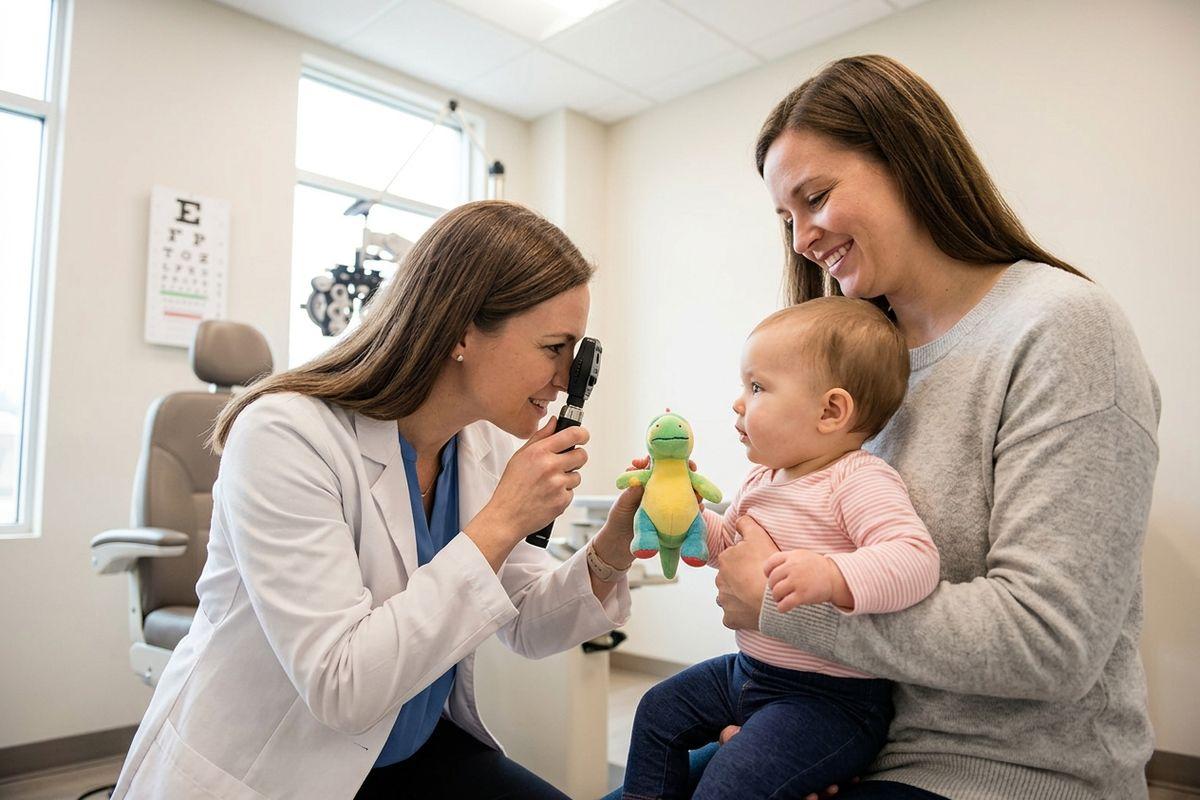
At this stage, your optometrist checks whether both eyes align, move together, and respond normally. They look for the red reflex, the reddish-orange reflection seen in flash photography, to help keep the eye’s internal structures healthy. These evaluations happen long before your baby can read a letter chart.
Preschool Exams (Ages 3 to 5)
By age 3, an optometrist can measure visual sharpness using simple picture charts or symbols. This visit screens for amblyopia, commonly called a lazy eye, where one eye does not develop as clearly as the other. It also checks for strabismus, which happens when the eyes point in different directions.
Both conditions respond much better to early treatment.
School-Age Exams (Ages 6 and Up)
Once your child starts school, visual demands jump significantly. Reading, writing, and screen time all require the eyes to focus for long stretches. Annual exams at this stage check for focusing stamina and myopia, known as nearsightedness.
If your child struggles in school and no one has identified a clear reason, vision is worth checking. A functional vision assessment can also identify issues with eye teaming or tracking that a standard exam might not catch on its own.
Why School Vision Screenings Are Not Enough
School screenings feel reassuring when a child passes, but they’re designed to flag only the most obvious problems. Research suggests they miss up to 75% of vision issues. A typical screening checks distance vision with a basic chart and nothing else.
A comprehensive eye exam goes much deeper, evaluating eye health, eye teaming, focusing ability, and depth perception. Kids tend to adapt to blurry or uncomfortable sight without realizing anything is wrong because they assume everyone sees the world the way they do. However, these changes can still affect their school and make it much harder to learn. If we identify issues with eye teaming or tracking that a standard exam might miss, we can offer treatments like vision therapy to improve visual function.
Protect your child’s visual development by relying on comprehensive eye exams rather than waiting for them to complain.
Signs Your Child May Need an Eye Exam Sooner
Sometimes visual problems pop up unexpectedly between routine visits. Pay attention to how your child interacts with their environment. Schedule a visit sooner if you notice any of the following symptoms:
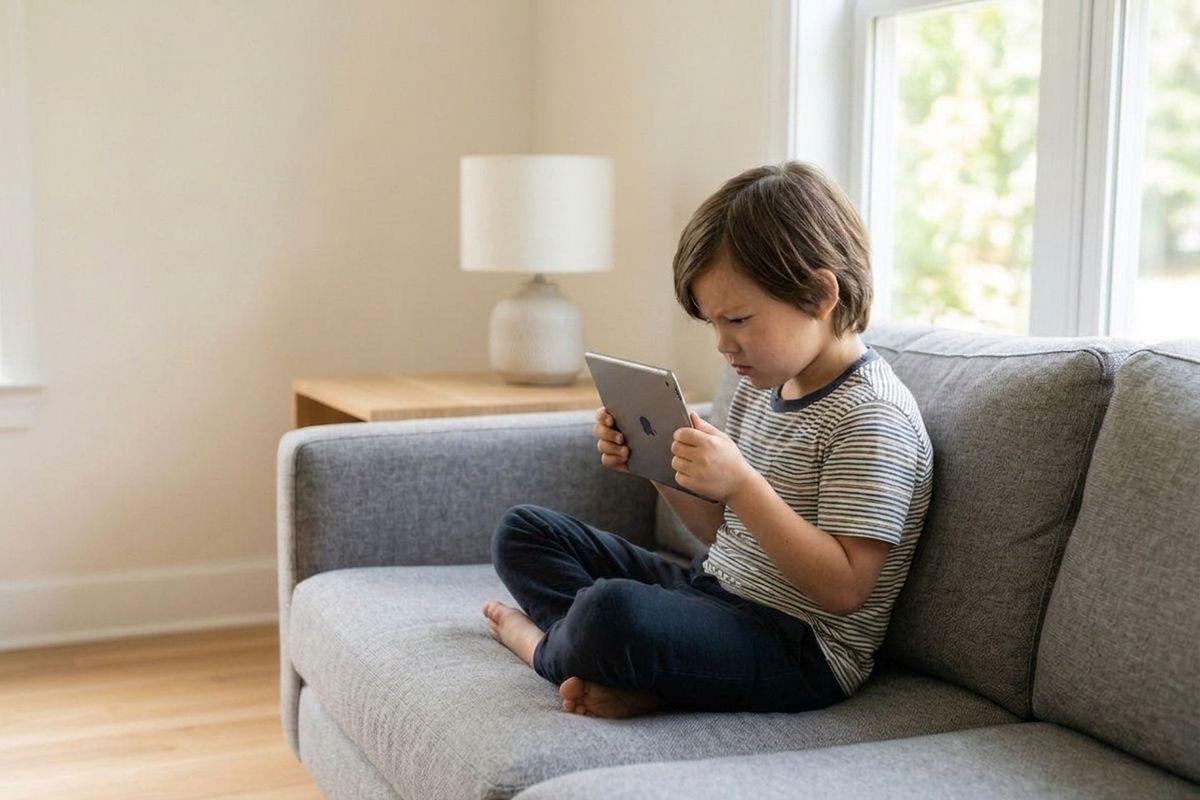
- Squinting, rubbing their eyes often, or sitting unusually close to the TV or tablet.
- Frequent headaches, especially after reading or schoolwork.
- Complaints about blurry or double vision, even if occasional.
- A family history of myopia, lazy eye, or eye turns.
What Myopia Looks Like in Children
Myopia occurs when the eye focuses light in front of the retina rather than directly on it, causing distant objects to appear blurry. Your child might squint to see the board at school or suddenly lose interest in playing sports. Symptoms typically appear between ages 6 and 12, and the prescription often changes noticeably from year to year.
Higher prescriptions are associated with a greater risk of serious eye conditions later in life, such as detached retinas, glaucoma, and cataracts.
Diagnosing nearsightedness early gives your optometrist more time and more options to help. Specific treatments may include specialty contact lenses, atropine drops, myopia control spectacles, or orthokeratology lenses worn overnight. These methods can help slow the progression of myopia over time. The sooner a child starts, the more of that progression window the treatment can cover.
Set Your Child Up for Success
Eye exams give your kids the tools they need to learn and play comfortably. If your child is due for an exam or you’ve noticed signs like squinting, headaches, or difficulty seeing at a distance, don’t wait for a school screening to notice the problem.
The team at Cary Family Eye Care provides thorough pediatric eye exams and personalized care, including myopia management when needed, to help children throughout the surrounding communities see the world with clear eyes.
Contact the office today to schedule your child’s next eye exam.